
news
Quantifying sources of subseasonal prediction skill in CESM2 within a perfect modelling framework
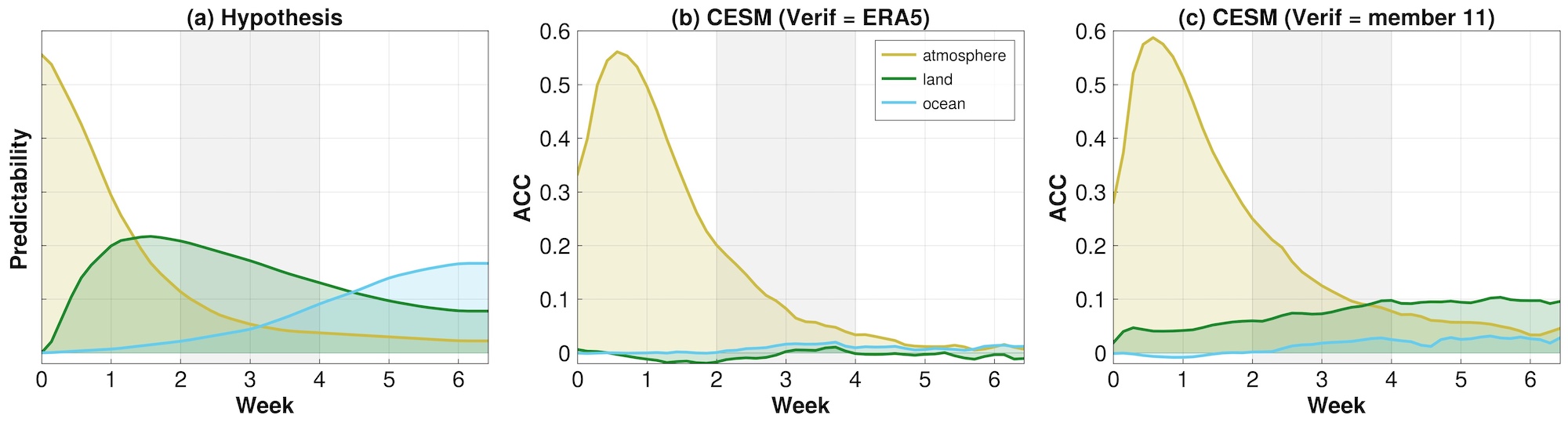
This study , led by Judith Berner, examines the fundamental limits of subseasonal-to-seasonal weather predictability and the role of land and ocean initial conditions. Using a climate model in a perfect-model framework, the authors show that beyond four weeks, land surface initialization - particularly soil moisture and snow - dominates predictability over land, with ocean conditions playing a secondary role. The results point to significant opportunities for improving extended-range forecasts through better land initialization and land–atmosphere coupling in prediction systems.